
TMFAs Navigator Tool
We have identified 17 functions implementation theories, models, frameworks, and approaches (TMFAs) can often serve. To explore TMFAs by function click the arrow on the right-hand side of that function.
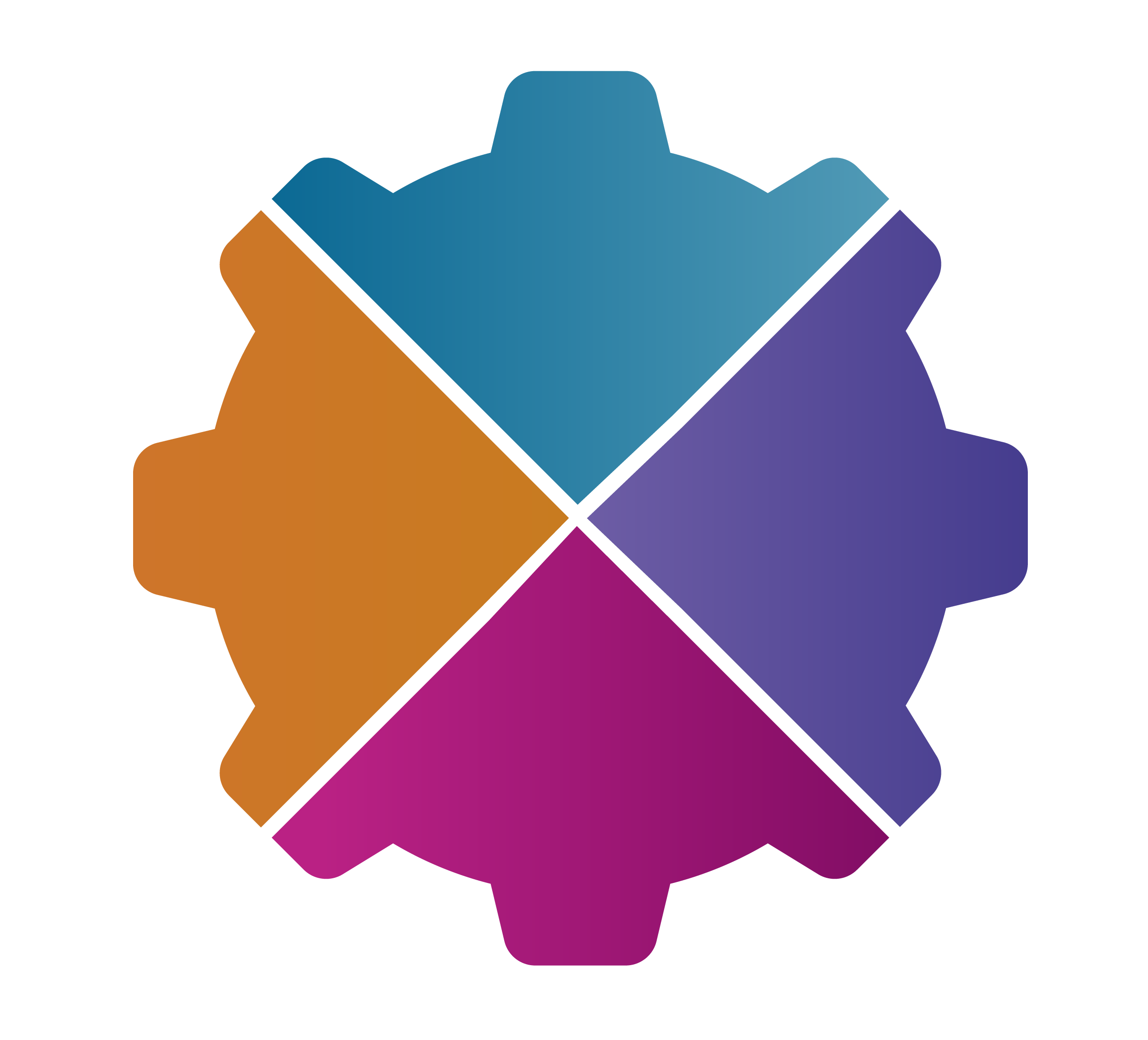
 Theory
 Model
 Framework
 Approach
TCI's Top Picks

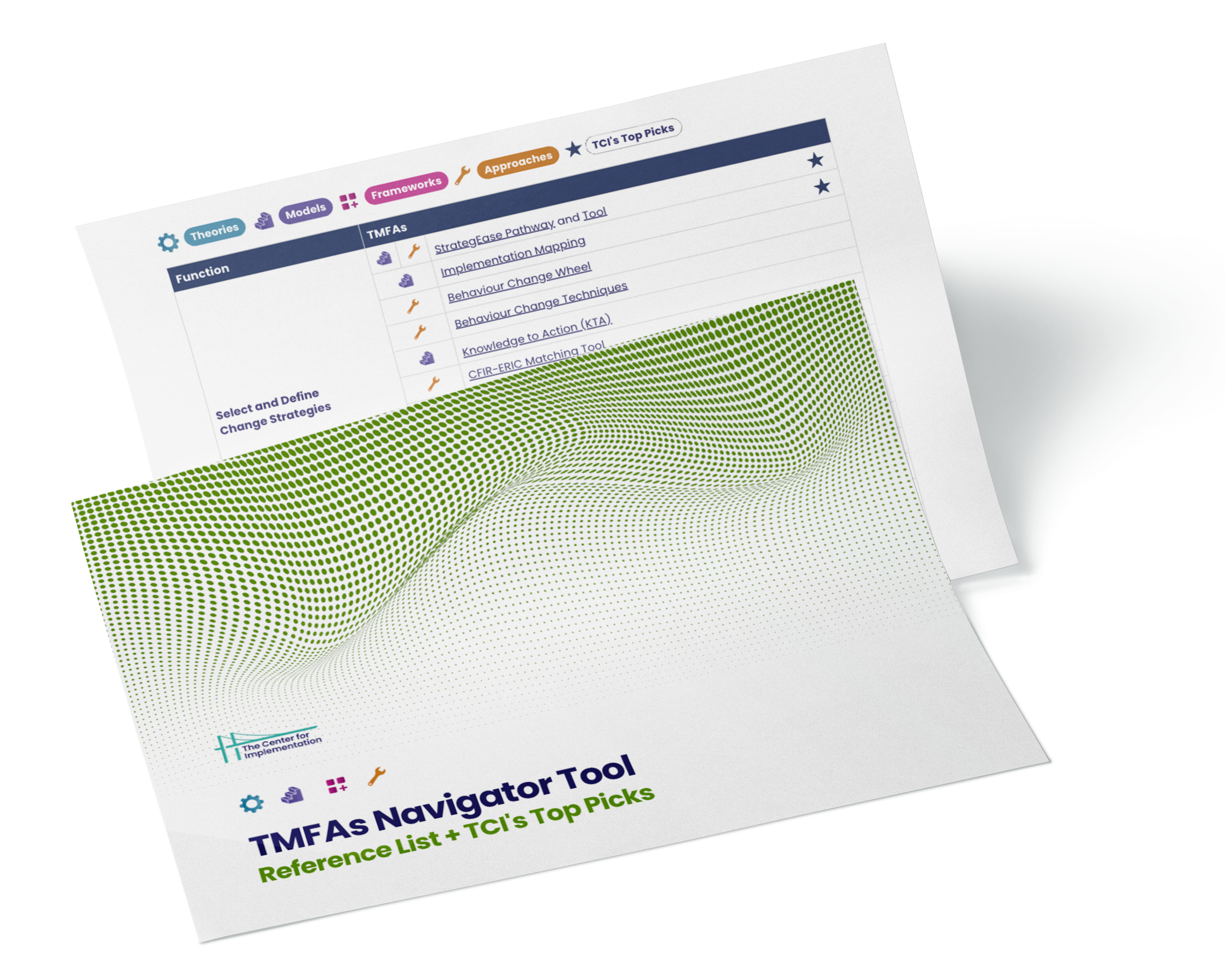
TMFAs Navigator Tool: Reference List + TCI's Top Picks (PDF)
Sign up to download a free PDF version of the TMFAs included in the online tool, organized by function.
This PDF includes descriptions, references, and TCI’s recommended TMFAs to help you get started.
By signing up to download this resource, you agree to be added to TCI’s mailing list. You can unsubscribe at any time.
About this tool
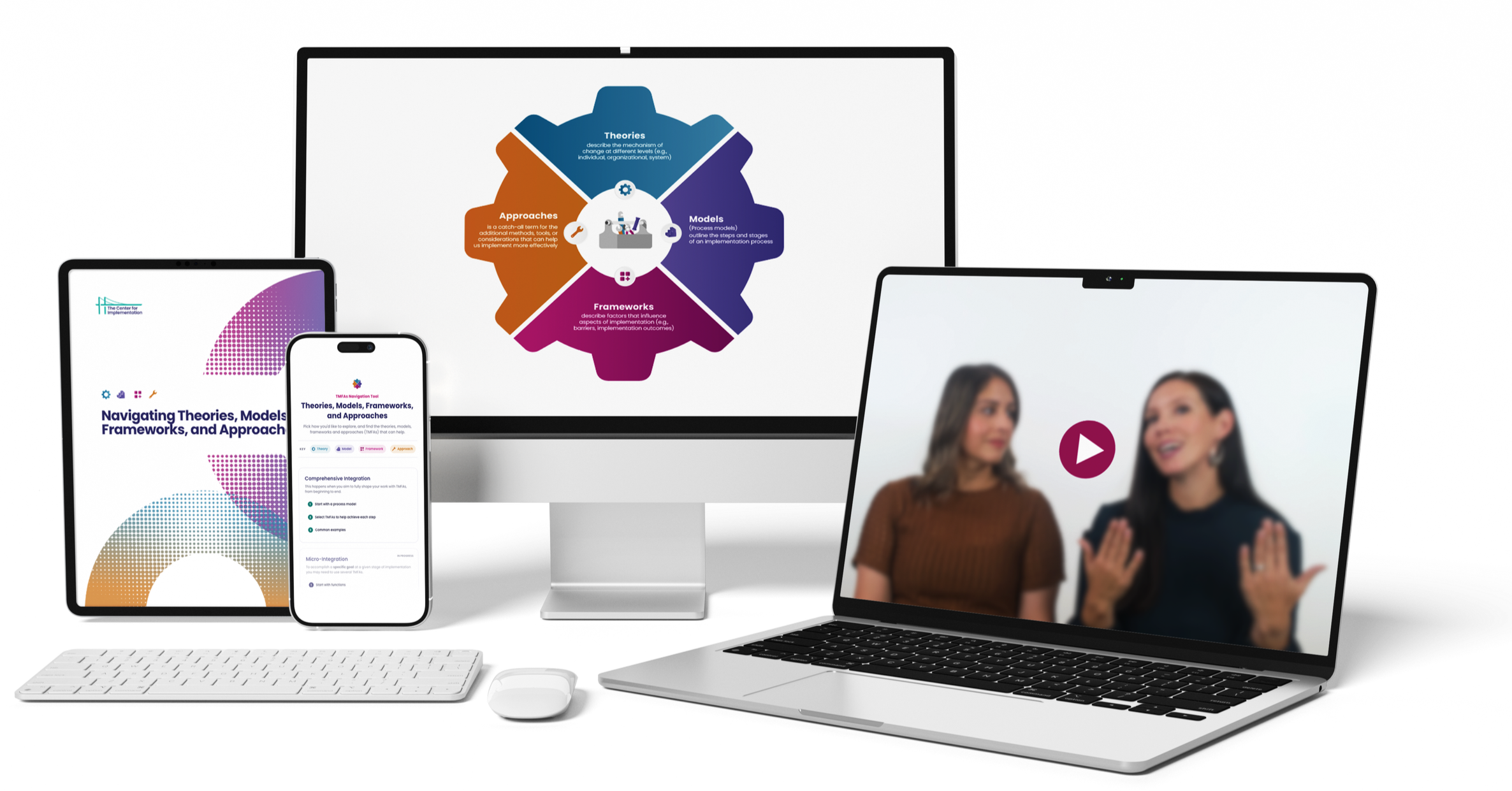
The TMFAs Navigator Tool is a free, interactive resource that helps you explore commonly used theories, models, frameworks, and approaches (TMFAs) in implementation science. Rather than presenting an exhaustive list, it organizes TMFAs by the function they can serve, so you can start with what you're trying to accomplish and find relevant options more easily.
This tool was developed alongside our TMFAs in Action toolkit, which takes you further by helping you understand, compare, select, combine, and apply TMFAs in your work.
-
The TMFAs Navigator Tool was designed to help practitioners and researchers quickly find theories, models, frameworks, and approaches (TMFAs), selecting them based on the underlying function that they serve.
TMFA definitions
The concepts and definitions of TMFAs used throughout this tool are based on and adapted from Nilsen's (2015) taxonomy, which groups TMFs into five categories that group into three overarching aims:
Describing/guiding the implementation process;
Understanding/explaining determinants; and
Evaluating implementation
"Approaches" is a term we added as a practical catch-all category for tools, resources, and strategies that are frequently used in implementation science, but are not TMFs.
Identifying the functions
A common pitfall we repeatedly observed in practice is that people would report that a TMFA "didn't work," when in fact they had selected a TMFA serving a different function than the one they actually needed (e.g., picking a framework designed to identify barriers and facilitators when they needed a process model to guide implementation planning).
To address this issue, we grouped TMFAs by function, drawing on the broader literature examining how TMFs are used, selected, and categorized. Our intention was to build a list of functions that align with practical applications of TMFAs. To do this, we built on and expanded what had already been synthesized for implementation research applications.
Our starting point was Nilsen's (2015) paper. We then drew on a series of academic papers and two existing TMF selection tools. Tabak et al. (2012) organized a large set of dissemination and implementation models along three dimensions (construct flexibility, dissemination/implementation focus, and socio-ecological level). T-CaST (Birken et al., 2018) provides 22 criteria (organized into usability, testability, applicability, and familiarity) for judging whether a given TMF is a good fit once candidates have been identified. This concept of “fit” closely aligns with our suggestion that people select TMFAs by function. The Dissemination and Implementation Models Webtool is an interactive online tool that provides a comprehensive list of TMFs that people can filter by socio-ecological level, field of origin, times cited, whether it’s for dissemination or implementation, and by constructs. The list of constructs (n = 48) informed our list of functions (n = 17), and we grouped similar constructs so that the list was more usable. Find TMF (Strifler et al., 2024) is an online tool that categorizes a comprehensive list of TMFs by aim, stage of implementation, and target level of change, built on Nilsen's five TMF categories. The SELECT-IT meta-framework (Fontaine et al., 2025) identified and categorized seven more granular reported purposes of TMFs.
We identified functions from these sources, particularly from the Dissemination and Implementation Models Webtool and SELECT-IT. Functions drawn directly from this work include: select and define change strategies; plan for implementation; describe the underlying assumptions and objectives of the initiative (i.e., the program theory of change); identify barriers and facilitators to change; plan and clarify roles and responsibilities in the implementation system; assess the fit or readiness of an initiative; identify implementation outcomes and indicators; and enact and monitor the implementation process.
We then identified additional functions in the literature that were not apparent in the existing lists of functions but relevant to practical applications of TMFAs: planning for adaptations (Moore et al., 2021; Stirman et al., 2013) and documenting their impact (Wiltsey Stirman et al., 2019; Kirk et al., 2020); defining change objectives (Bartholomew Eldredge et al., 2016; Fernandez et al., 2019); strengthening relational dynamics (Metz et al 2024; Bartley et al., 2026); considering equity (Woodward et al., 2021; Crump et al., 2026); identifying and strengthening implementation supports (Wandersman et al., 2012; Albers et al., 2020); planning for sustainability (Wiltsey Stirman et al., 2012; Shelton et al., 2018); planning for spread and scale (Milat et al., 2015; ExpandNet, 2010); and assessing implementation costs (Saldana et al., 2014; Eisman et al., 2026).
Identifying and reviewing TMFAs for each function
The TMFAs Navigator Tool does not aim to provide an exhaustive inventory of every TMFA in existence (systematic reviews estimate over 150 exist, not counting approaches). Instead, we focused on TMFAs commonly used in the implementation science literature and those we have used.
To assess whether a TMFA was a good fit to include in the TMFAs Navigator Tool beyond its function alone, we also drew on six factors identified in the literature: the aspect of implementation it addresses, the level it was designed for (individual, organizational, system), the setting it was developed for, the clarity of its concepts, its inherent equity focus, and its intended use (research, practice, or both).
A living resource
We expect this list of functions and TMFAs to evolve and expand over time. This is not intended as a complete or final inventory; existing selection tools and inventories already serve that purpose (e.g., Find TMFs and the D&I Models Webtool). Our goal is to make TMFAs understandable, practical, and useful for implementation-related work. Users of the tool can also suggest additional TMFAs, which we will review annually in December.
-
We designed this tool with simplicity in mind. It's essentially a repository of the TMFAs we've found most relevant in implementation science, based on both the literature and our own experience working with implementation practitioners. TMFAs are organized by function, so you can click on the function you're interested in exploring to see the TMFAs related to it.
-
We would like to thank Per Nilsen for starting the conversation about defining and distinguishing theories, models, and frameworks, and all of the people who have developed, refined, and adapted implementation science TMFAs.
We would like to give a special thank you to Dr. Andrea Chaplin for her support in developing TMFAs in Action.
-
It is an acknowledged weakness that many implementation science TMFAs were not originally designed with equity and justice in mind. Therefore, additional TMFAs or equity considerations are sometimes needed.
-
The Center for Implementation. (2026). TMFAs navigator tool [Online tool]. https://thecenterforimplementation.com/tmfas-navigator-tool
-
To learn about our approach to using inclusive and values-based language, check our Terminology Acknowledgment.